
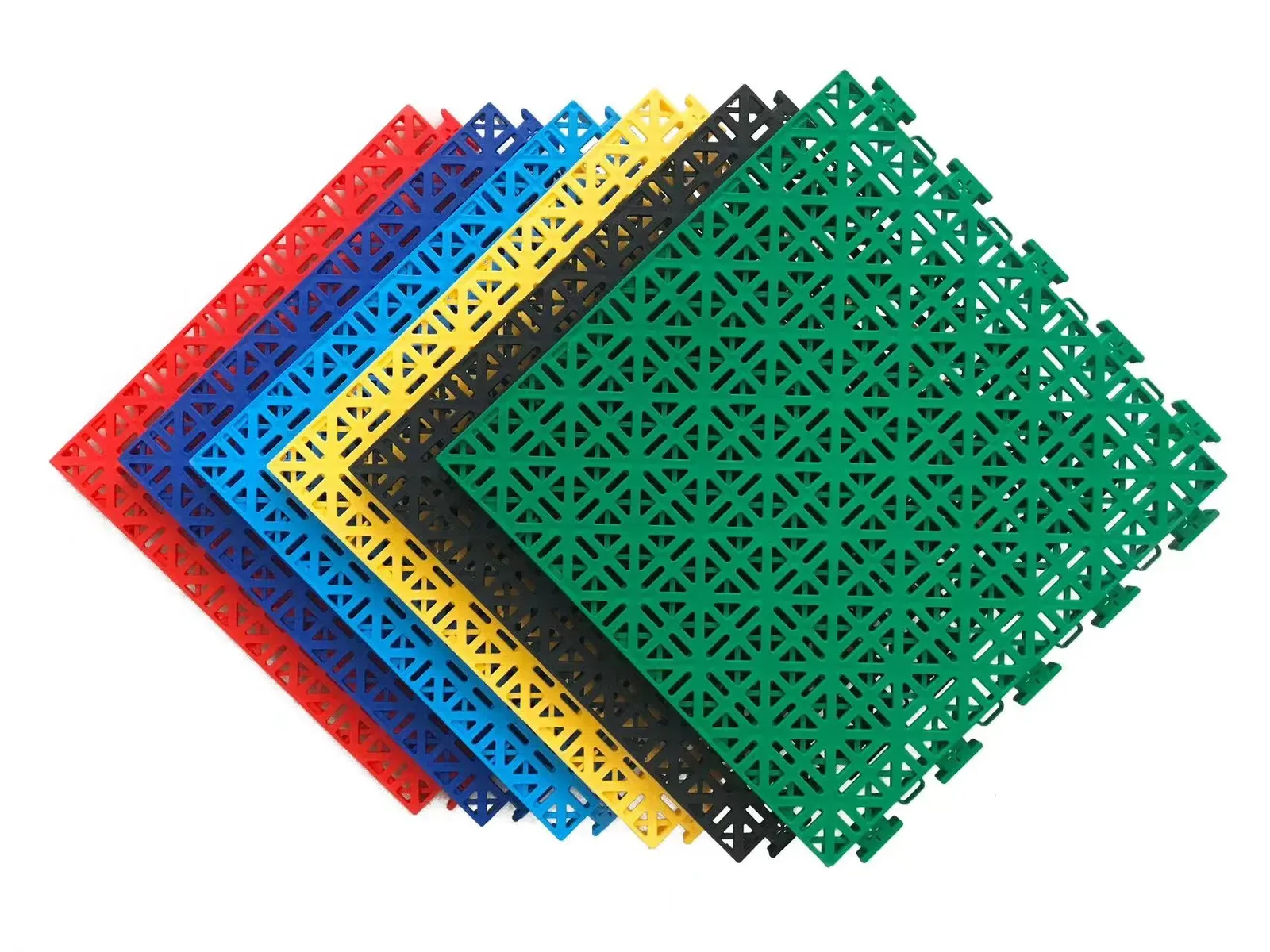
Tennis surface types at a glance
Tennis surfaces include natural grass, clay, hard-court systems and manufactured surfaces such as artificial grass, carpet and modular tiles. Each brings a different construction and maintenance requirement. Compare the complete system, the existing base and how the court will be used before choosing a material.
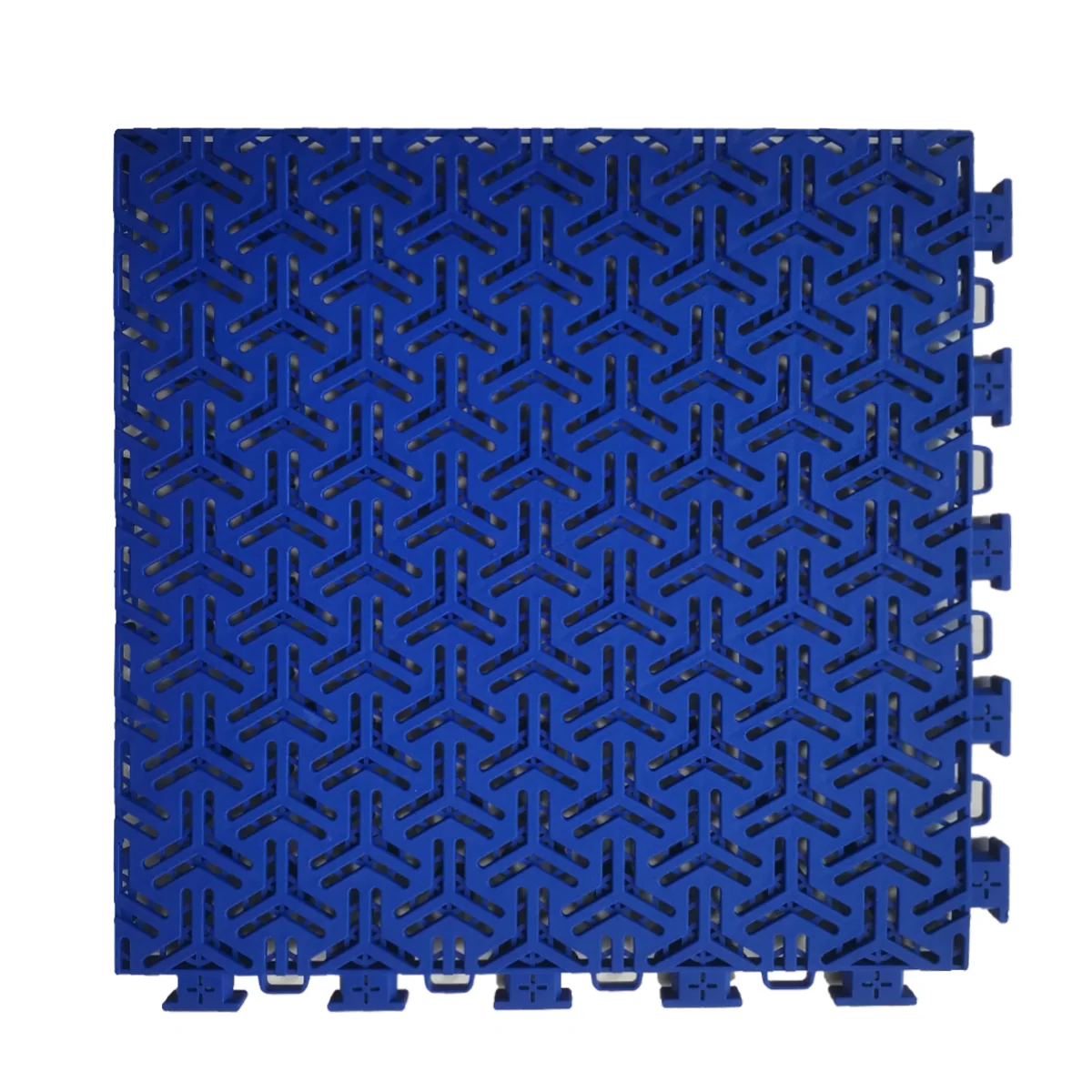
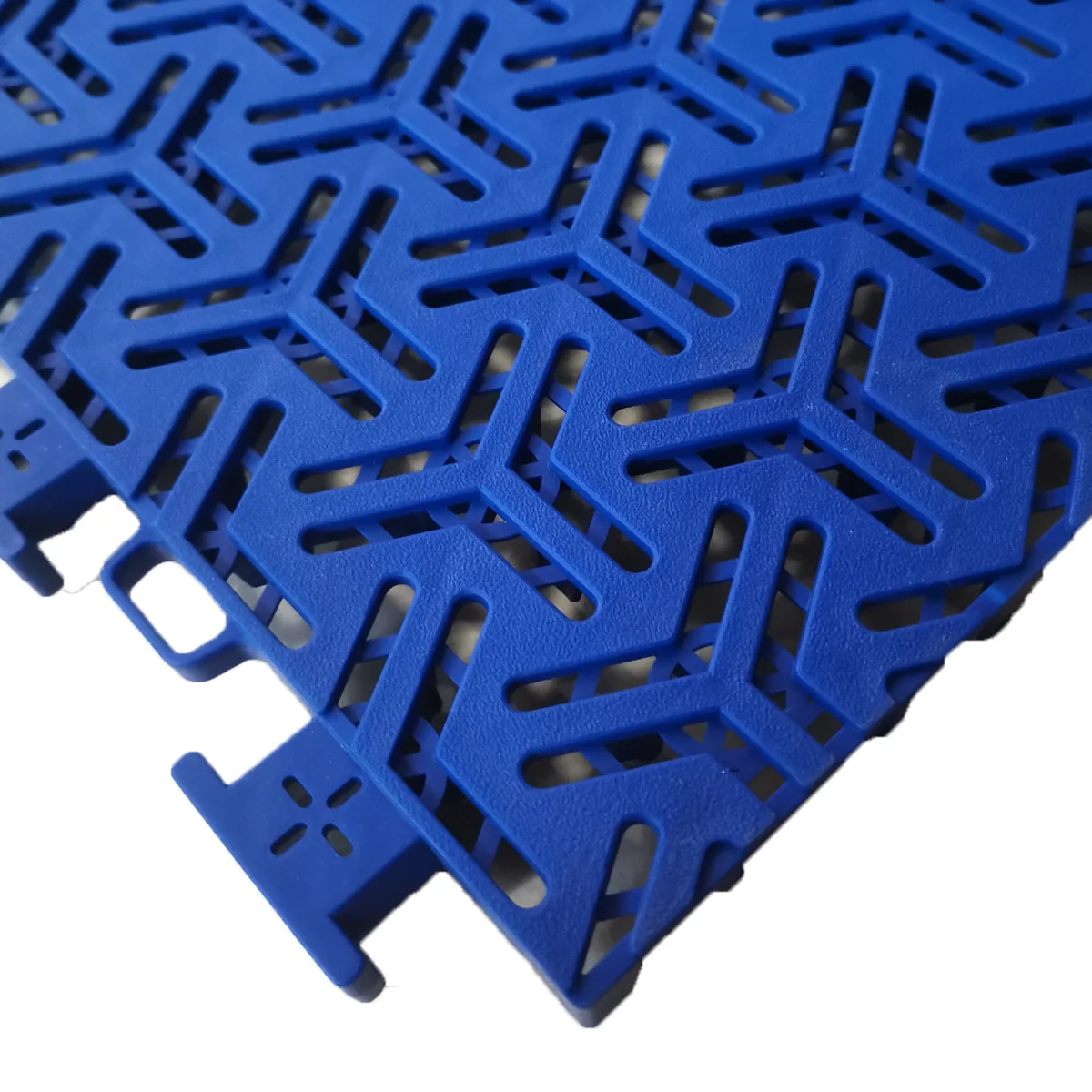
Modular surface details
In this guide
Compare tennis court surface categories
| Surface family | Category-level construction | Planning implication |
|---|---|---|
| Grass | Living natural turf | Specialist establishment and ongoing grounds care are part of the operating decision. |
| Clay | Unbound mineral playing layer; natural, artificial and hybrid systems must not be treated as identical | Moisture, grooming, material upkeep and local climate belong in the comparison. |
| Hard court | A rigid asphalt or concrete base with a selected tennis surface system, commonly including textured acrylic or polyurethane materials | Base condition and the specified surface system matter; do not infer one universal layer count or speed. |
| Artificial/synthetic | Manufactured systems such as artificial grass, artificial clay and carpet/roll systems | Verify indoor/outdoor suitability, seams, maintenance and the selected system specification. |
| Modular/interlocking | Manufactured tiles assembled over a suitable reviewed base | Treat modular flooring as one alternative for configurable zones and component replacement, not as the definition of every synthetic court. |
The categories are not directly interchangeable. A fair comparison starts with the same project brief and separates surface supply from base construction, drainage, fencing, lighting, equipment and installation responsibilities.
How tennis surface construction and playing context differ
Compare the surface together with its base, exposure, drainage or moisture context, maintenance responsibility and renewal plan. Indoor and outdoor settings change the questions that must be answered, but a category should not be labeled suitable for either setting until the selected system is confirmed for that use.
Court geometry is a separate input. Use the tennis court dimensions guide for marked singles/doubles geometry and total tiled-area planning.
How court pace is classified
The ITF groups tested court pace into five categories: slow, medium-slow, medium, medium-fast and fast. Pace classification applies to the tested surface product; it does not mean ITF approval or endorsement. Ask for the actual classification when pace is part of the specification rather than inferring it from a material name.
Grand Slam surfaces: current examples
| Tournament | Current surface family |
|---|---|
| Australian Open | Hard court |
| US Open | Hard court |
| Roland-Garros | Clay |
| Wimbledon | Grass |
The Australian Open and US Open use hard courts, Roland-Garros uses clay, and Wimbledon uses grass. These are examples of surface families, not a specification for a new facility. Systems within a family can differ in construction, pace and upkeep.
When modular tennis flooring may fit
Modular interlocking flooring may suit projects that value defined color zones, component replacement and an assembled tile system over a confirmed base. The current Movevia range maps EC305 Series, STD305 Series and PRO300H to tennis applications. Product selection still depends on the actual site and project requirements.
Surface choice does not replace base review. Confirm flatness, condition, drainage context and any repair responsibility before selecting or installing modular flooring.
Questions to answer before comparing quotations
- Is the court indoors or outdoors?
- What is the existing base material and condition?
- Is the site dedicated to tennis or shared with other sports?
- Who will maintain, repair and eventually renew the surface?
- What total area, colors, lines and perimeter finish are required?
- Which supply, shipping and installation tasks belong in the quotation?
Tennis surface questions
Which tennis court surface is best?
No single surface is best for every project. Compare the base, use, maintenance, installation and lifecycle requirements before selecting a category.
Can modular tiles be installed over any surface?
No. The existing base and site conditions must be reviewed for the selected flooring system. Request current installation information for the shortlisted model.
What is a tennis hard court made of?
A hard court generally starts with a rigid asphalt or concrete base and a specified tennis surface system over it. The upper materials and build-up vary by system, so this guide does not prescribe a universal layer count or thickness.
Are all hard courts the same speed?
No. Court pace is measured for the complete surface system and classified separately. A hard-court label alone does not establish one universal pace.
What surface types can be used indoors?
Indoor suitability depends on the selected system, base, moisture conditions, operations and maintenance plan. Verify the actual system instead of assuming that every member of a broad category is suitable indoors.
Where do modular interlocking tiles fit among tennis surfaces?
Modular tiles are one manufactured system assembled over a suitable reviewed base. They may suit projects that value configurable colors and replaceable components, while the Tennis Court Flooring Application and current product documents own Movevia-specific selection and specifications.
Where can I review Movevia tennis options?
Start with the Tennis Court Flooring Application, then send the site and scope details for product review.

 +86 153 5079 0183